.png)
Weight loss clinics generate a surprising amount of data. Providers track body composition, medications, lab results, nutrition plans, follow-up visits, progress photos, and patient communication, often across multiple systems. As clinics grow, keeping everything organized becomes increasingly difficult, especially when staff are switching between separate scheduling, billing, charting, and patient engagement platforms.
The right Electronic Health Record (EHR) for weight loss practices can simplify these workflows. Rather than functioning as a digital chart alone, modern platforms help clinics manage the entire patient journey, from online intake and consultations to treatment documentation, recurring memberships, laboratory testing, and long-term progress tracking.
If you're evaluating software in 2026, this comparison highlights six leading EHR platforms for weight loss clinics and the features that matter most.
Why Weight Loss Clinics Need a Specialized EHR
Medical weight loss programs differ from many traditional primary care practices.
Patients typically return for frequent follow-up visits, ongoing coaching, medication management, laboratory monitoring, and lifestyle counseling. Many clinics also combine services such as hormone replacement therapy (HRT), nutritional counseling, functional medicine, aesthetics, peptide therapies, or wellness memberships.
That complexity makes software selection especially important.
A purpose-built EHR for weight loss should help providers:
- Document individualized treatment plans
- Track patient progress over time
- Manage recurring appointments
- Support medication management
- Organize laboratory testing
- Simplify patient communication
- Reduce administrative work
Without integrated workflows, staff often spend unnecessary time entering the same information into multiple systems.
What to Look for in an EHR for Weight Loss Clinics
Not every EHR is designed with weight management practices in mind.
Before selecting a platform, evaluate how it supports both clinical care and day-to-day operations.
Customizable Clinical Documentation
Weight loss protocols vary significantly between providers.
Some clinics focus on nutrition and behavioral coaching, while others incorporate prescription medications, peptide therapies, HRT, or functional medicine.
Custom templates allow providers to document visits efficiently without relying on generic notes.
Laboratory Integration
Lab work often guides treatment decisions.
Many practices routinely monitor:
- Comprehensive metabolic panels
- Lipid panels
- A1C
- Thyroid function
- Insulin markers
- Hormone levels
- Vitamin deficiencies
Integrated laboratory ordering and results reduce manual work while keeping patient information centralized.
Medication Management
Prescription management is another key consideration.
Depending on the clinic, providers may prescribe:
- GLP-1 medications
- Appetite suppressants
- Hormone therapies
- Nutritional supplements
- Other weight management medications
Electronic prescribing streamlines the process while improving documentation.
Patient Portal and Digital Forms
Administrative efficiency often starts before the patient arrives.
Digital tools that allow patients to complete intake paperwork, sign consent forms, upload health information, and securely message the clinic can reduce front-desk workload and improve the patient experience.
Scheduling and Membership Management
Many weight loss clinics offer recurring programs or monthly memberships.
Features worth considering include:
- Automated recurring billing
- Package management
- Appointment scheduling
- Online booking
- Payment processing
These capabilities become increasingly valuable as patient volume grows.
Top 6 EHR Platforms for Weight Loss Clinics (2026)
1. OptiMantra
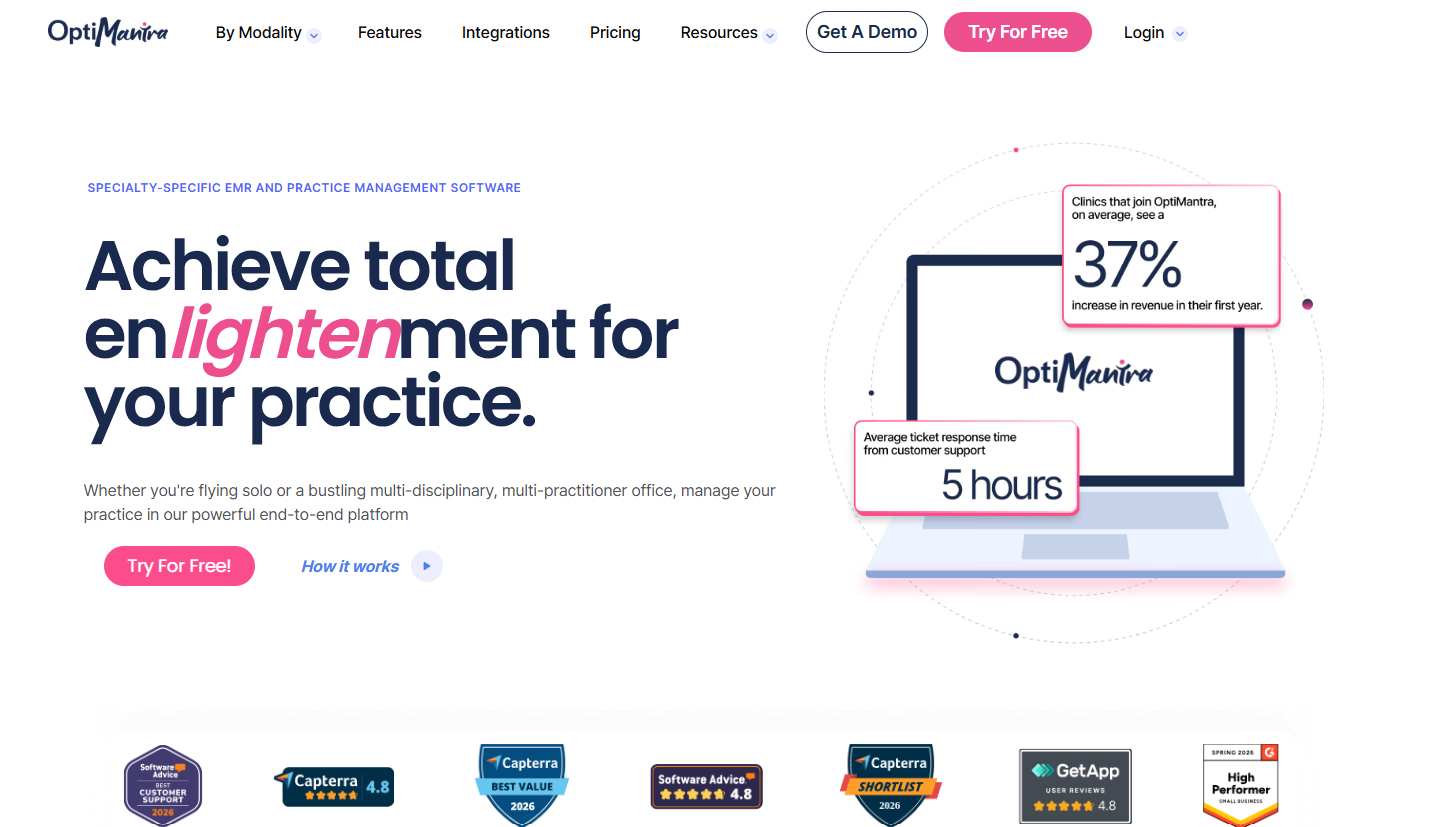
Best for: Medical weight loss, functional medicine, integrative medicine, wellness clinics, hormone therapy, and hybrid practices.
OptiMantra combines electronic health records, practice management, patient engagement, scheduling, and billing into a single platform designed for specialty healthcare practices.
Its flexibility makes it particularly well suited for clinics offering comprehensive weight management programs that extend beyond routine office visits.
Strengths
- Customizable chart templates
- Membership billing and recurring payments
- HIPAA-compliant patient portal
- Digital intake forms and electronic signatures
- Secure patient messaging
- Telehealth integration
- ePrescribing through MDToolbox, including controlled substances
- Laboratory integrations with Labcorp, Quest, Access Medical Labs, and specialty laboratories
- Inventory management for supplements and clinic-dispensed products
- AI-powered documentation through DeepCura integration
Considerations
Practices offering multidisciplinary weight management services, including nutrition, HRT, wellness memberships, and functional medicine, may benefit from having these workflows managed within one platform.
User Reviews:
- OptiMantra on Capterra: Rated 4.8/5 Stars
- OptiMantra on G2: Rated 4.8/5 Stars
OptiMantra is built to give practices the flexibility and functionality they need to manage their practice effectively.
Don’t just take our word for it. Alexis C. states, “Overall, OptiMantra offers exceptional value for the price. It’s a robust, flexible EMR that truly supports the unique needs of integrative practices. I highly recommend it."
OptiMantra customer support is also highly acclaimed. This is shown in Tammy D’s review, “I have had very few problems, but when i do have problems, the staff is quick to help me find the solution. Quite often, the solution was already there on the "help" pages and I just didn't look in the right place.”
Try OptiMantra with a free trial or demo today!
2. Cerbo
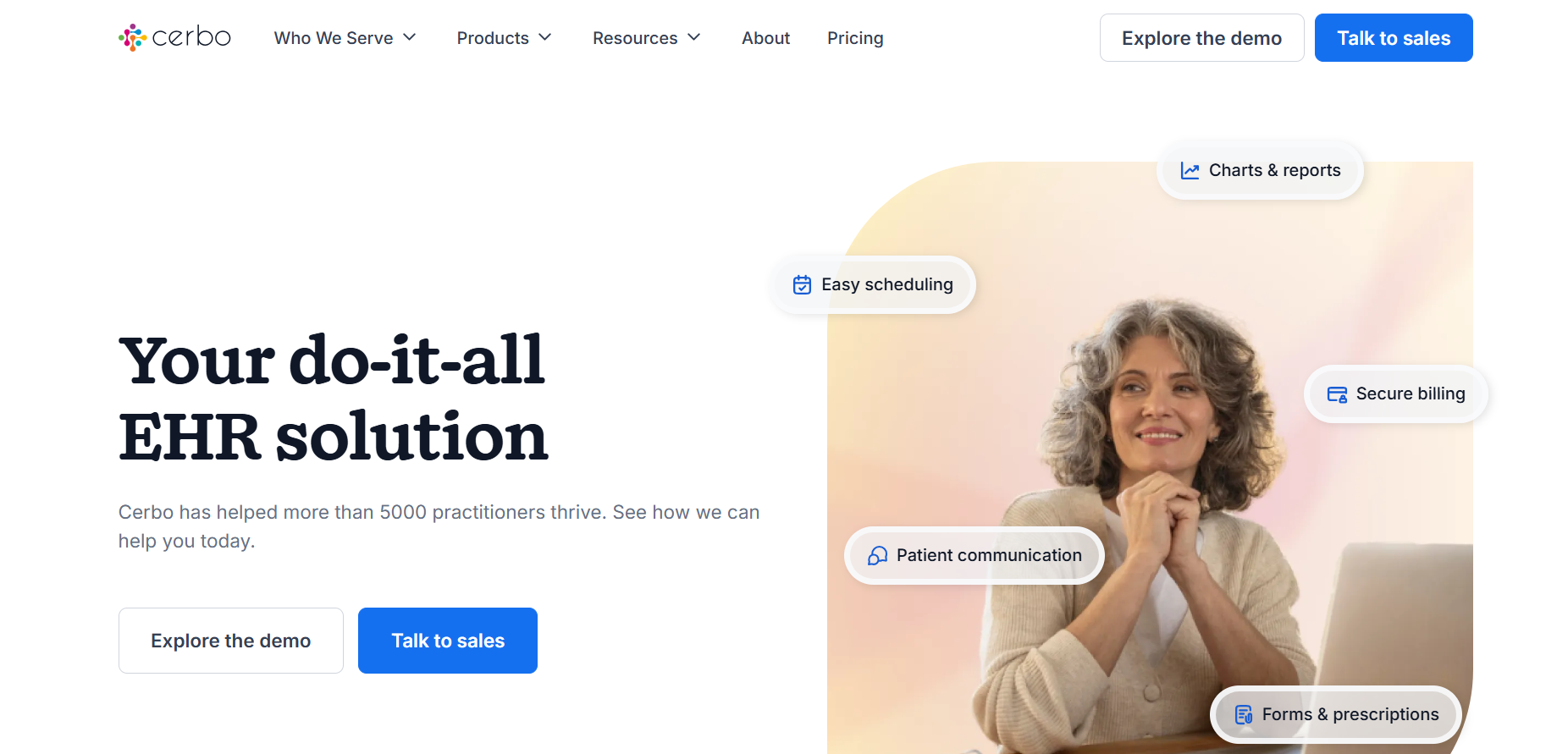
Best for: Functional medicine and cash-pay weight loss practices.
Cerbo is widely used among personalized medicine providers who require extensive documentation flexibility.
Strengths
- Highly customizable charting
- Laboratory integrations
- Patient portal
- Telemedicine
- Secure messaging
Considerations
Implementation often involves more customization to tailor workflows to the practice.
User Reviews:
- Cerbo on Capterra: Rated 4.3/5 Stars
- Cerbo on G2: Rated 4/5 Stars
Cerbo brings together clinical, communication, and practice management tools that can help providers work more efficiently and simplify the patient experience.
Dahlia M. describes a positive experience with Cerbo’s features and support, stating, “My overall experience with using Cerbo has been phenomenal, from their customer support to the features they currently have available and others planned. My patient communication, charting efficiency, sharing of educational materials, and dissemination of nutraceuticals has become a flawlessly easy process with Cerbo. I have saved time, energy, money, and patient trust since integrating this software.”
3. Healthie
Best for: Nutrition, coaching, lifestyle medicine, and virtual weight loss programs.
Healthie emphasizes patient engagement and ongoing communication.
Many practices appreciate its focus on nutrition tracking and coaching.
Strengths
- Telehealth
- Messaging
- Scheduling
- Patient portal
- Nutrition tracking
- Client engagement tools
Considerations
Clinics with complex medical documentation requirements should evaluate whether its clinical capabilities meet their needs.
User Reviews:
- Healthie on Capterra: Rated 4.4/5 Stars
- Healthie on G2: Rated 4/5 Stars
Healthie is a popular option for practices looking for tools to support nutrition, wellness, and client management, but some users have raised concerns about its pricing structure and overall value.
Cassandra L. stated, “Overall good, however my understanding of everything when it was first presented was not that I would have to purchase the $199 per month option plus an additional $50 per month for each practitioner. It feels like a bait and switch…”
4. Elation Health
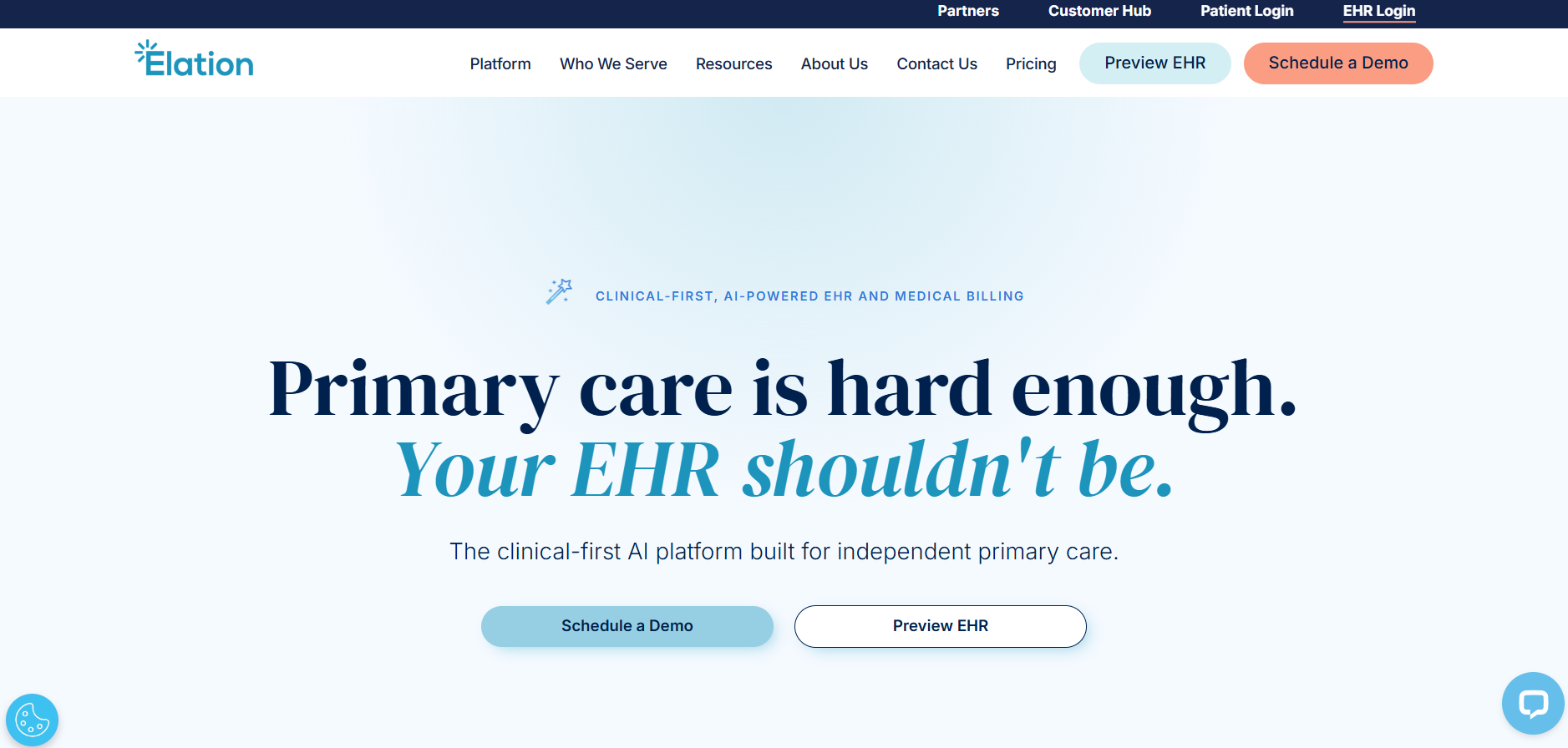
Best for: Independent primary care and preventive medicine practices.
Elation Health offers strong physician-focused documentation with an intuitive interface.
Strengths
- Clinical documentation
- Patient portal
- ePrescribing
- Referral management
- Population health features
Considerations
Some specialty weight loss workflows may require additional customization or third-party solutions.
User Reviews:
- Elation on Capterra: Rated 3.8/5 Stars
- Elation on G2: Rated 4.4/5 Stars
Elation Health may work well for practices with basic EHR needs, but some users have found limitations in areas such as support, reporting, and scalability.
Ilanit M. states, “We decided to discontinue with Elation Health for a variety of reasons: customer support wasn't great, there was no analytics or robust reporting, and it wouldn't have allowed us to scale our business in a way that we envision for our company. It is a good entry-level EHR software but is not robust enough for our needs.”
5. DrChrono
Best for: Small medical practices seeking broad specialty support.
DrChrono combines scheduling, billing, mobile documentation, and electronic prescribing.
Strengths
- Mobile EHR
- Medical billing
- Patient portal
- Scheduling
- ePrescribing
Considerations
Feature availability depends on the selected subscription plan.
User Reviews:
- DrChrono on Capterra: Rated 3.9/5 Stars
- DrChrono on G2: Rated 3.4/5 Stars
The platform offers useful tools for appointment scheduling, patient management, and billing, although some users have noted limitations with payment options.
“Overall satisfactory experience, I have my medical appointments scheduled, improvised reminders. It enables optimised patient data management. I use it to track my billing and invoicing. The payment options are limited.” - Alfiya
6. CharmHealth
Best for: Independent outpatient clinics.
CharmHealth offers cloud-based access with integrated clinical and administrative tools.
Strengths
- Cloud-based platform
- Patient portal
- Scheduling
- Telehealth
- Billing
- ePrescribing
Considerations
Practices with highly specialized medical weight loss programs should evaluate available customization options.
User Reviews:
- CharmHealth on Capterra: Rated 4.2/5 Stars
Healthie offers a range of tools for healthcare practices, with telemedicine and Fullscript connectivity being notable features for some users.
Elizabeth S. highlighted the telemedicine platform and Fullscript integration, stating, “I like that telemedicine platform, that is easy to use, and the fullscripts it easy. That's the only thing that really makes it stand out from other EMRs.”
Comparison at a Glance
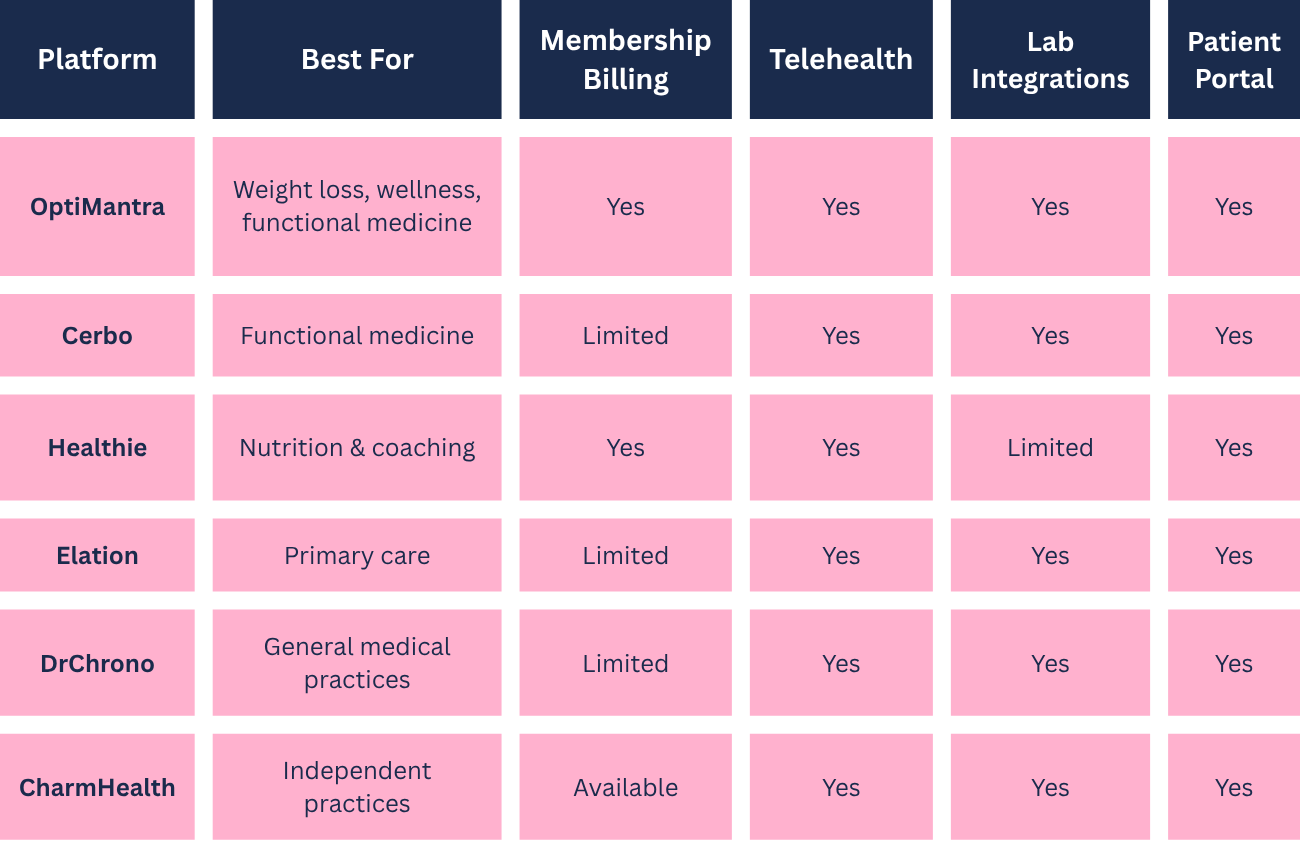
Features are subject to change. Verify current functionality directly with each vendor.
Questions to Ask Before Choosing an EHR
Software demonstrations often highlight features, but operational fit matters just as much.
Ask vendors questions such as:
- Can providers customize chart templates?
- Does the system support recurring memberships?
- How are laboratory orders and results managed?
- Can patients complete intake forms online?
- Is secure messaging included?
- What telehealth solution is available?
- Does the platform support ePrescribing?
- What reporting tools are available?
- How long does implementation typically take?
The answers will often reveal whether the platform supports your actual workflow or simply checks feature boxes.
Practical Takeaways
Selecting the right EHR for weight loss clinics involves balancing clinical flexibility with operational efficiency.
Keep these recommendations in mind:
- Choose software designed for specialty care rather than only general primary care.
- Prioritize customizable documentation.
- Look for integrated lab workflows.
- Evaluate patient communication tools.
- Consider membership billing if your clinic offers recurring programs.
- Think about future growth, not just today's needs.
- Request a live demonstration using your clinic's typical patient workflow.
A platform that saves a few minutes during every patient visit can create significant operational gains over time.
Finding the Best EHR for Your Weight Loss Practice
Weight loss practices often need more than an electronic chart, they need a platform that supports recurring care, personalized treatment plans, and efficient patient management. OptiMantra helps bring these workflows together in a single system.
Relevant features for medical weight loss clinics include:
- Customizable chart templates for documenting individualized treatment plans
- Digital intake forms and electronic signatures through the patient portal
- HIPAA-compliant telehealth integration
- Secure patient messaging
- ePrescribing through MDToolbox, including support for controlled substances
- Lab integrations with Labcorp, Quest, Access Medical Labs, and specialty laboratories
- Membership billing and recurring payment support for ongoing programs
- Inventory management for supplements and clinic-dispensed products with lot tracking
- Practice management tools that connect scheduling, documentation, billing workflows, and financial reporting
By centralizing these functions, clinics can reduce duplicate documentation, improve workflow consistency, and spend more time focused on patient outcomes.
If you're looking for an integrated solution built for medical weight loss, functional medicine, wellness, and hybrid specialty practices, explore an OptiMantra demo or free trial to see how it can help streamline documentation, patient management, and practice operations.