

A new weight loss clinic can have the best medical protocols, strong patient demand, and a talented clinical team, and still struggle because of operational friction.
It usually starts small. Intake forms are incomplete. Follow-up visits take longer than expected because staff are hunting down lab results. Patients miss check-ins because reminders weren’t automated. Billing gets messy when cash-pay programs, memberships, and insurance-covered services overlap.
Those issues add up fast.
For providers opening a weight loss clinic in 2026, clinical expertise is only part of the equation. The systems you build from day one will shape patient experience, staff efficiency, compliance, and long-term profitability. And at the center of those systems is your EHR and practice management setup.
Choosing the right platform isn’t just about charting.
It’s about creating a workflow that supports consultations, recurring follow-ups, lab tracking, treatment protocols, medication management, patient communication, scheduling, and financial visibility without forcing your team into disconnected tools.
Here’s the complete EHR setup checklist to help your clinic launch with a stronger operational foundation.
Why EHR Setup Matters for a Weight Loss Clinic
A weight loss clinic operates differently than a general primary care practice.
Patient care is often highly longitudinal. Success depends on regular follow-ups, progress tracking, behavior coaching, lab interpretation, treatment adjustments, and consistent communication.
Many clinics are also blending multiple care models, including:
- Medical weight management
- Functional medicine assessments
- Hormone optimization
- Nutritional counseling
- GLP-1 medication management
- Body composition analysis
- Membership-based coaching
- Cash-pay wellness programs
That creates workflow complexity.
Your EHR needs to support both clinical documentation and business operations without forcing workarounds for every patient interaction.
For specialized practices, poor system setup often leads to:
- Longer patient onboarding times
- Documentation inconsistencies
- Missed follow-up opportunities
- Revenue leakage from billing errors
- Limited visibility into patient retention
- Administrative burnout
Getting the infrastructure right early helps prevent expensive operational fixes later.
The Complete EHR Setup Checklist for Opening a Weight Loss Clinic
Define Your Clinical Care Model First
Before evaluating software, map out how your weight loss clinic will actually deliver care. This sounds obvious, but many clinic owners choose an EHR before defining their workflow.
Start by clarifying:
What services will you offer?
Will your clinic focus on:
- Physician-supervised medical weight loss
- Functional medicine-based metabolic optimization
- GLP-1 prescribing and monitoring
- Nutrition and lifestyle coaching
- Body composition assessments
- Lab-based metabolic analysis
- Membership wellness programs
Your service mix determines your documentation, scheduling, billing, and reporting requirements.
What does the patient journey look like?
Map each step:
Initial inquiry → consultation scheduling → intake forms → first evaluation → treatment planning → recurring follow-ups → progress reassessment
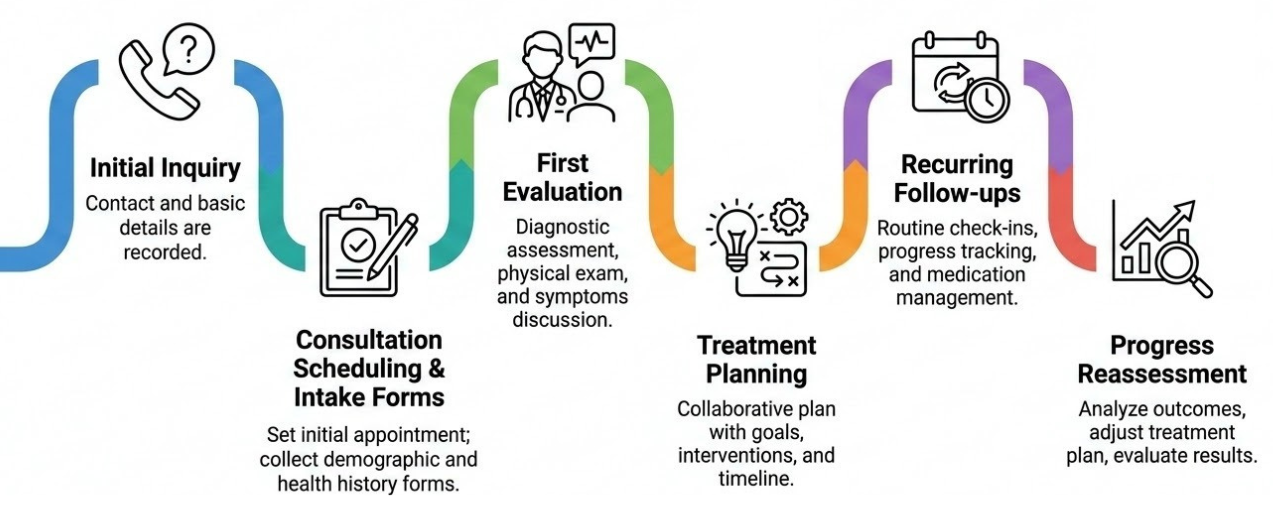
If your software cannot support that flow efficiently, friction will show up quickly.
Build Custom Intake and Assessment Workflows
Weight loss consultations often require more detailed intake data than standard primary care visits.
You may need to capture:
- Medical history
- Weight loss history
- Current medications
- Nutrition habits
- Sleep patterns
- Exercise frequency
- Hormonal symptoms
- Metabolic risk factors
- Behavioral health considerations
- Lifestyle goals
Generic intake forms create extra manual work.
A strong EHR should allow your weight loss clinic to build customized digital forms that feed directly into the patient chart.
That means providers can review meaningful data before the visit instead of spending the first 20 minutes collecting information manually.
This becomes especially important as patient volume grows.
Set Up Weight Tracking and Outcome Monitoring
Patients expect measurable progress. Your system should make it easy to document and visualize longitudinal outcomes.
Track Core Metrics
Depending on your clinical model, this may include:
- Weight trends
- BMI changes
- Waist circumference
- Body fat percentage
- Muscle mass
- Blood pressure
- Lab markers
- Medication response
- Adherence metrics
Progress tracking should be simple enough for routine use. If entering metrics requires too many clicks, documentation consistency drops.
Create Repeatable Follow-Up Templates
Most weight loss programs involve recurring check-ins.
Standardized follow-up templates help ensure providers consistently document:
- Progress since last visit
- Side effects or medication tolerance
- Lifestyle adherence
- Goal adjustments
- Treatment modifications
- Next-step recommendations
Consistency matters for both clinical quality and operational efficiency.
Configure Scheduling for Recurring Care
Scheduling is one of the biggest operational pain points for a new weight loss clinic.
Most clinics are not booking isolated one-time appointments.
They are managing recurring patient touchpoints like:
- Initial 60–90 minute consultations
- Monthly medication follow-ups
- Nutrition coaching sessions
- Lab review visits
- Accountability check-ins
- Body composition reassessments
Without scheduling automation, front desk staff spend hours coordinating repeat appointments.
Look for scheduling tools that support:
- Automated recurring appointments: Patients enrolled in structured treatment plans should be able to schedule recurring visits efficiently.
- Appointment type customization: Different visit types need different durations, provider assignments, and workflows.
- Automated reminders: Missed follow-ups disrupt treatment adherence and reduce revenue. Reminder automation is one of the simplest ways to improve retention.
Prepare for Billing Complexity
Billing for a weight loss clinic can get complicated fast since some services may be cash-pay while others may involve insurance reimbursement, lab billing, memberships, supplements, or medication-related charges.
You need a system that handles multiple financial models cleanly.
Establish Billing Workflows Early
Clarify:
- Which services are self-pay
- Which may be insurance-billable
- How memberships will be structured
- How recurring payments will be processed
- How claims will be documented and tracked
If financial workflows are unclear at launch, billing confusion can create cash flow problems within weeks.
Track Revenue by Service Line
A clinic offering medical weight loss, nutrition counseling, and wellness memberships should understand which services drive profitability.
Financial visibility helps clinic owners make smarter staffing and growth decisions.
Integrate Lab Ordering and Result Management
Lab testing often plays a central role in medical weight management.
Your weight loss clinic may need to evaluate:
- Thyroid function
- Insulin resistance
- Metabolic panels
- Lipid markers
- Hormone levels
- Inflammatory markers
- Nutritional deficiencies
Manual lab workflows create unnecessary delays.
A well-configured EHR should streamline:
- Ordering labs
- Receiving results
- Linking results to patient charts
- Reviewing trends over time
- Using data to adjust treatment plans
When providers can easily connect lab findings to clinical decision-making, care becomes more efficient and personalized.
Establish Secure Patient Communication Systems
Weight loss care is rarely limited to in-office visits.
Patients often need between-visit support for:
- Medication questions
- Symptom updates
- Lifestyle coaching
- Accountability check-ins
- Progress reporting
Without a secure communication system, clinics often default to fragmented email chains or phone tag. That creates documentation gaps and operational inefficiency.
A patient portal with secure messaging keeps communication centralized and documented. It also improves responsiveness without overwhelming staff.
Build Documentation Templates That Scale
Documentation burden grows quickly as patient volume increases. This is where many clinic owners feel the operational strain.
Custom chart templates can dramatically reduce charting time while improving consistency.
Templates for a weight loss clinic may include:
- Initial evaluation templates: Capture baseline history, goals, risks, and assessment findings.
- Medication management follow-up templates: Document response, side effects, titration plans, and monitoring.
- Coaching progress templates: Track adherence, obstacles, wins, and behavior changes.
Well-designed templates create structure without forcing providers into rigid workflows.
Plan Reporting and Performance Visibility
Launching a clinic without reporting infrastructure is like flying blind.
You need visibility into:
- Patient retention rates
- Program completion rates
- Appointment utilization
- Revenue trends
- Provider productivity
- Treatment outcomes
These metrics help identify operational problems before they become major issues. A growing weight loss clinic needs real-time insight, not monthly spreadsheet cleanup.
Practical EHR Setup Tips Before Launch
A few decisions made before opening can save months of frustration later.
- Test workflows before seeing patients: Run simulated patient journeys through your system such as scheduling appointments, completing intake forms, documenting visits, and processing payments. You’ll uncover workflow gaps quickly.
- Train staff on real scenarios: Generic software training rarely sticks. Use examples your team will actually encounter.
- Avoid disconnected systems: The more standalone tools you bolt together, the more administrative overhead you create. Integrated systems reduce duplicate work.
- Build for growth: Choose an EHR that supports where your clinic is headed, not just what you need on opening day.
Setting Your Weight Loss Clinic Up for Long-Term Success
For providers opening a weight loss clinic, operational simplicity matters.
OptiMantra is an EHR and practice management system that helps specialized practices build efficient workflows by bringing clinical and administrative tools into one connected platform.
Key capabilities that directly support weight management clinics include:
- Customizable charting and documentation: Build templates for evaluations, follow-ups, nutrition consults, progress tracking, and ongoing care protocols, helping reduce documentation time while improving consistency.
- Integrated scheduling and recurring appointments: Support structured treatment programs with automated scheduling and reminders designed specifically for recurring care and ongoing patient engagement.
- Digital intake and patient communication: Collect intake information electronically, streamline onboarding, and maintain secure, centralized messaging between providers and patients.
- Financial visibility and billing support: Track payments, memberships, and overall financial performance within a single system while supporting streamlined billing workflows.
- Lab integration and clinical workflow support: Order, track, and review lab results directly within the patient chart to support continuous, data-informed treatment planning.
For specialized practices managing ongoing patient relationships, having these workflows connected in one platform can significantly reduce operational friction.
If you’re preparing to launch or refine your clinic operations, exploring how an integrated platform like OptiMantra supports specialized practice workflows can help you avoid many of the common setup challenges.
You can schedule a demo or start a free trial to evaluate whether it fits your clinic’s care model and long-term goals.


.png)