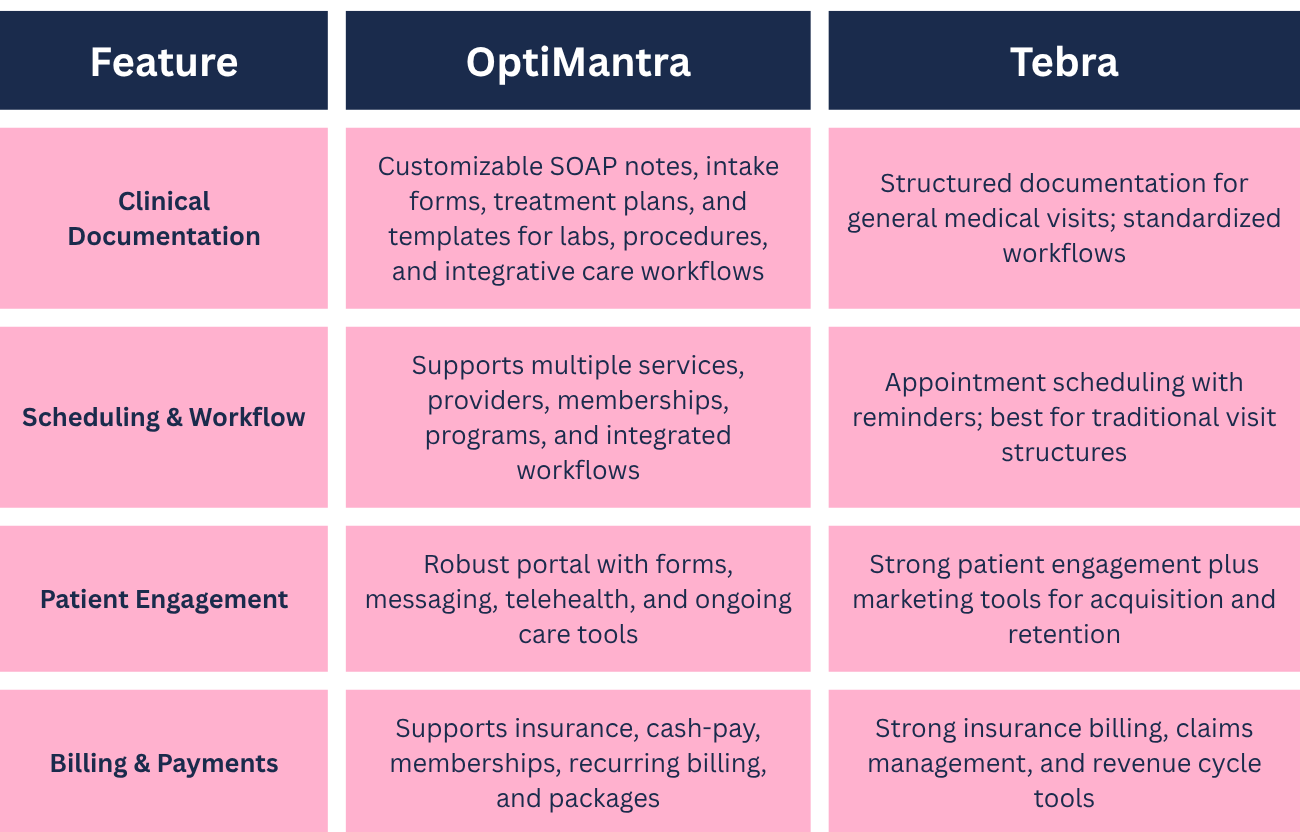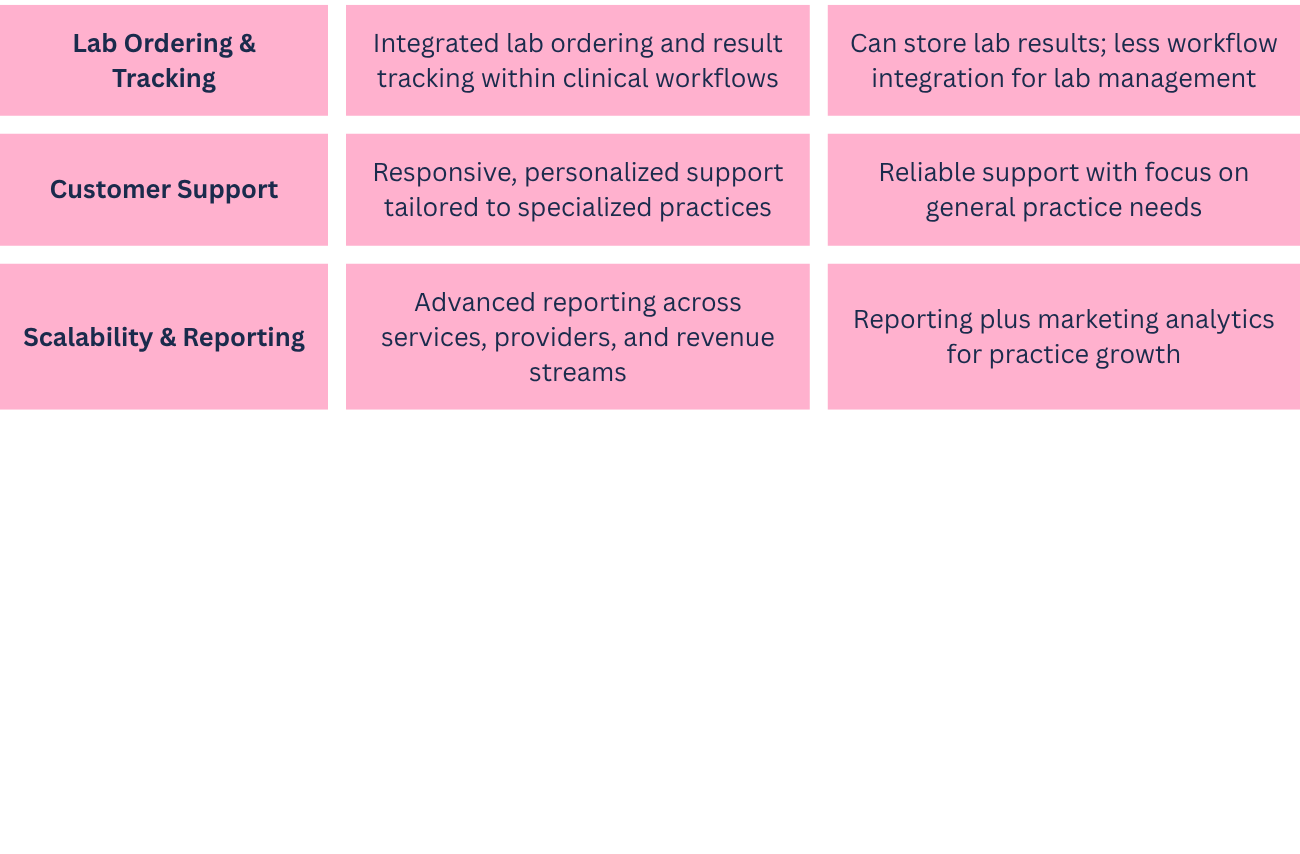
Choosing an electronic health record (EHR) and practice management platform is a decision that shapes how your clinic operates day to day, and how well it adapts as your services evolve. OptiMantra and Tebra are both established platforms in the healthcare space, but they are built with different practice models in mind.
While both systems cover core functionality like scheduling, documentation, billing, and patient communication, the differences become more apparent in how they support specialized care, multi-service offerings, and long-term growth.
This comparison breaks down OptiMantra vs. Tebra across key categories to help you evaluate which platform aligns with your workflows, revenue model, and future plans.
Brand Overview
OptiMantra
OptiMantra is a comprehensive, all-in-one EMR and practice management platform designed for specialized practices, including integrative medicine, functional medicine, med spas, wellness clinics, and multidisciplinary care teams.
The platform emphasizes flexibility across clinical, operational, and financial workflows. From lab tracking and memberships to multi-service scheduling and advanced reporting, OptiMantra is built to support practices managing complex care models within a single, unified system.
Tebra
Tebra is a cloud-based platform that combines EHR, billing, and patient experience tools. It is widely used by independent medical practices, particularly those focused on primary care and insurance-based services.
Tebra offers a broad set of features including clinical documentation, billing, marketing tools, and patient engagement capabilities, with a strong emphasis on helping practices attract and retain patients.
Feature Comparison
1. Clinical Documentation & Charting
OptiMantra
OptiMantra provides highly customizable documentation designed for practices that go beyond standard visit types. Providers can create SOAP notes, intake forms, treatment plans, and templates tailored to services like lab analysis, IV therapy, functional medicine protocols, and long-term care plans.
The system supports longitudinal records, making it easier to connect lab results, treatment decisions, and patient outcomes over time, especially valuable for practices managing ongoing care.
Tebra
Tebra offers structured clinical documentation tools suitable for general medical workflows. Providers can document patient visits, manage charts, and maintain records efficiently within a standardized framework.
This approach works well for traditional care settings, though practices with highly customized or multi-service documentation needs may require additional adaptation.
2. Scheduling & Workflow Management
OptiMantra
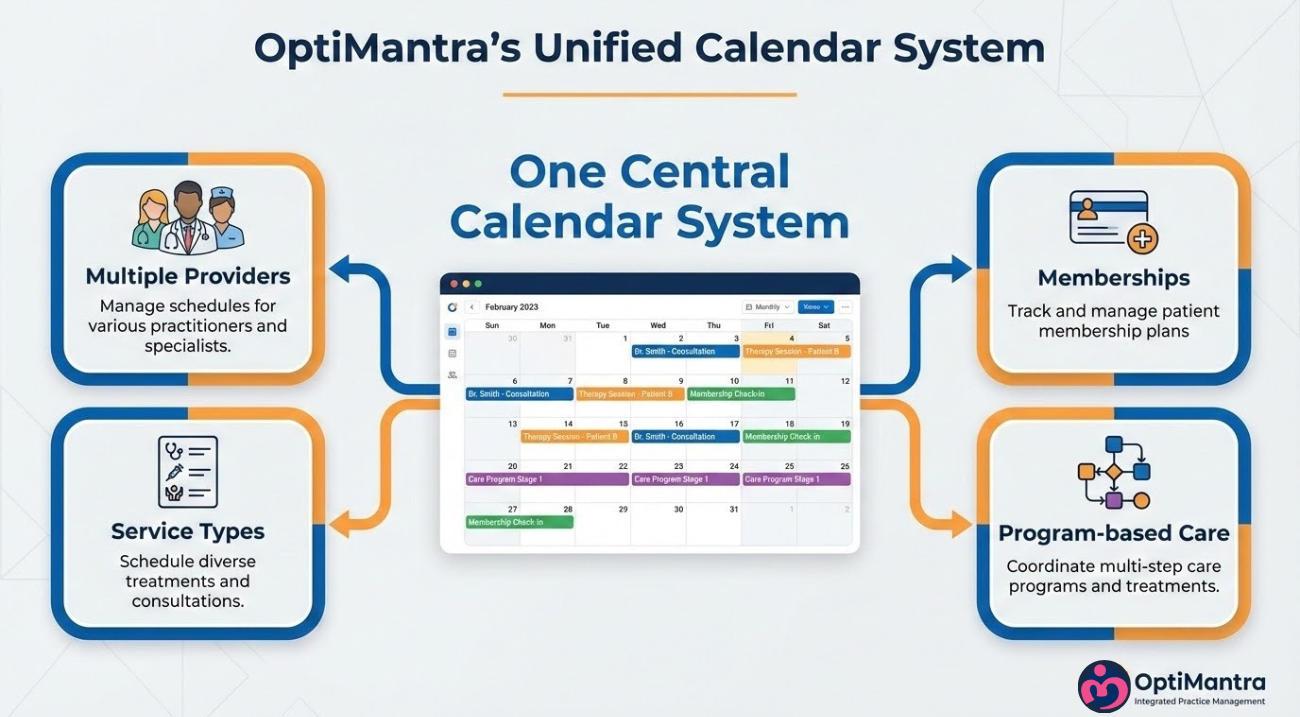
OptiMantra’s scheduling system is built for flexibility. Practices can manage multiple providers, service types, memberships, and program-based care within one calendar system.
Scheduling is closely integrated with documentation, billing, and reporting, helping streamline operations and reduce administrative overhead across the patient lifecycle.
Tebra
Tebra includes scheduling tools with calendar management, appointment reminders, and workflow support. It is effective for practices with consistent appointment types and traditional visit structures.
For practices expanding into multiple service lines or more complex care programs, additional coordination may be required.
3. Patient Engagement & Communication
OptiMantra
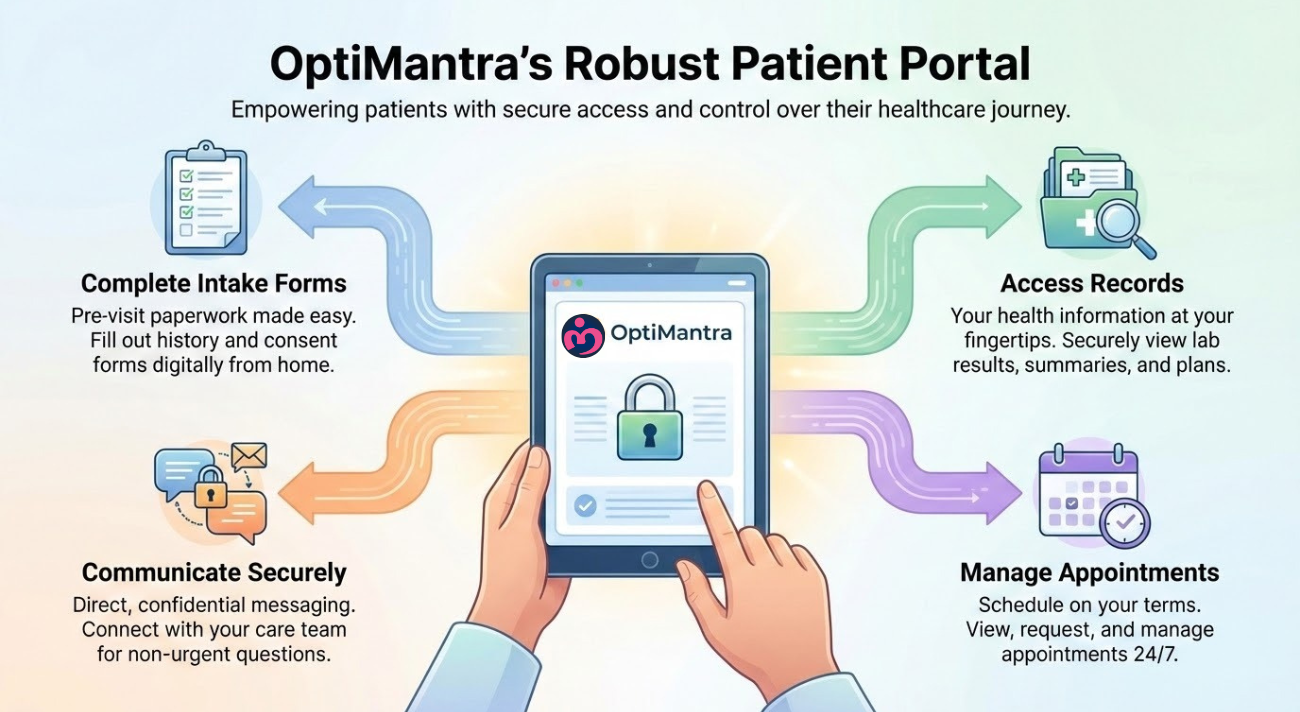
OptiMantra includes a robust patient portal where patients can complete intake forms, access records, communicate securely, and manage appointments.
Integrated telehealth, automated reminders, and follow-ups help maintain engagement throughout longer care journeys, supporting adherence and continuity of care.
Tebra
Tebra places a strong emphasis on patient experience and growth. Its platform includes online scheduling, patient communication tools, and marketing features designed to help practices attract new patients and maintain engagement.
This makes it particularly useful for practices focused on visibility and patient acquisition.
4. Billing, Payments & Revenue Management
OptiMantra
OptiMantra supports both insurance-based and cash-pay models, making it well-suited for practices offering memberships, packages, and recurring services.
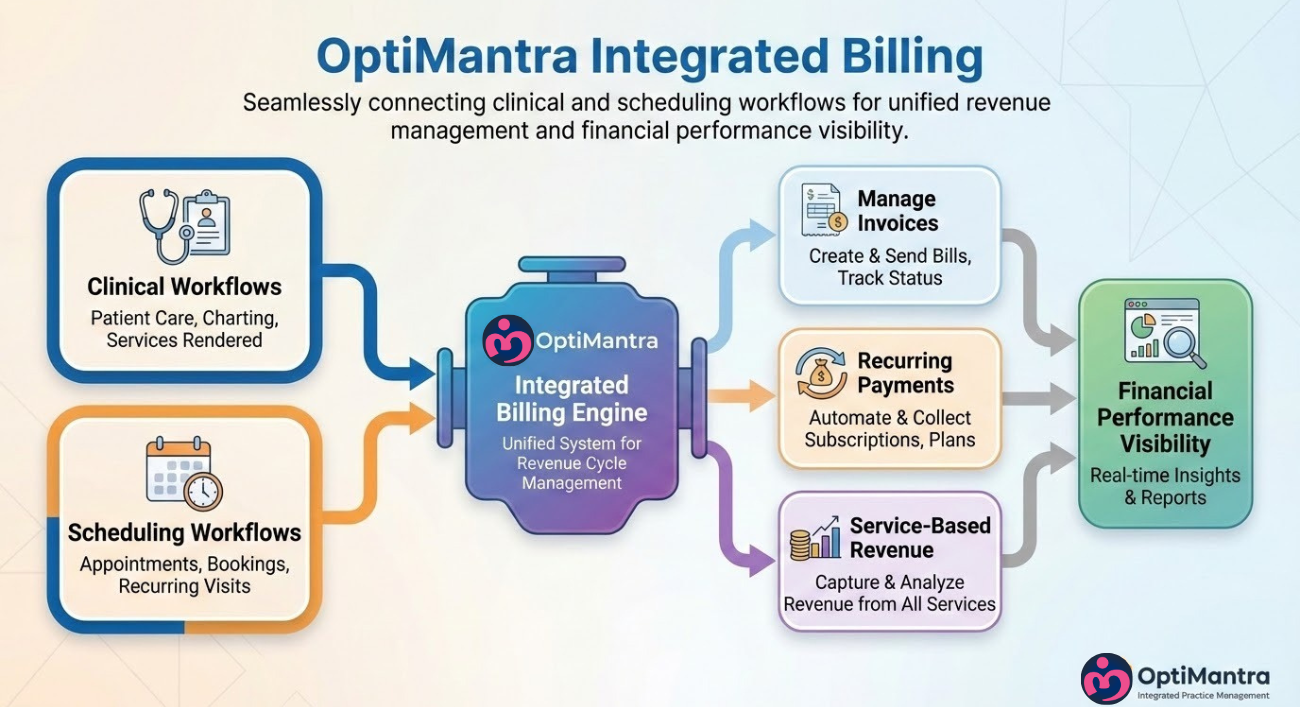
Billing is integrated with clinical and scheduling workflows, allowing practices to manage invoices, recurring payments, and service-based revenue within one system, while maintaining visibility into financial performance.
Tebra
Tebra has strong billing capabilities, particularly for insurance-based practices. It includes tools for claims management, revenue cycle management, and payment processing.
For practices primarily operating within traditional insurance workflows, this structure aligns well with standard billing processes.
5. Scalability, Reporting & Practice Growth
OptiMantra
OptiMantra is designed to scale with practices offering multiple services and revenue streams. Advanced reporting provides insight into performance across providers, services, memberships, and overall operations.
This allows practices to make data-driven decisions as they grow and expand service offerings.
Tebra
Tebra includes reporting tools that help practices track financial and operational performance. It also offers marketing analytics to support patient acquisition and retention efforts.
For growing practices, especially those focused on expanding patient volume, these tools provide useful visibility into business performance.
Pricing & User Feedback
OptiMantra
OptiMantra’s pricing reflects its position as a comprehensive solution for specialized practices. Users often highlight its flexibility, ability to support complex workflows, and strong customer support tailored to non-traditional care models.
Tebra
Tebra’s pricing is often cited by users as a key consideration, with many noting that it can be on the higher side, especially as additional features, providers, or services are added. Reviews frequently highlight its integrated functionality and focus on helping independent practices manage both operations and patient acquisition.
Reviews
Third-party platforms like G2, Capterra, GetApp, and Software Advice provide additional insight into how these platforms perform in real-world settings.
OptiMantra users often emphasize its adaptability, particularly for integrative, functional, and wellness-focused practices managing diverse services and care plans. See OptiMantra’s reviews on G2, Capterra, GetApp, and Software Advice.
Alexis C. writes on Software Advice, “Overall, OptiMantra offers exceptional value for the price. It’s a robust, flexible EMR that truly supports the unique needs of integrative practices. I highly recommend it.”
Tebra users commonly highlight its ease of use for traditional medical workflows and its built-in tools for patient engagement and practice growth. Explore Tebra’s reviews on G2, Capterra, GetApp, and Software Advice.
Mary Ann S. states in Capterra, “Overall I am very happy with Tebra. Cost is a big downfall. When I have had a problem setting up the prescribing system, Tebra was very responsive and helpful. I did not have difficulty connecting with help.”
Final Verdict: OptiMantra vs. Tebra
OptiMantra and Tebra are both capable platforms, but they are designed for different types of practices.
Tebra is well-suited for independent medical practices operating within traditional care models, particularly those focused on insurance-based services and patient acquisition.
OptiMantra is designed for specialized practices that manage multiple services, complex care plans, and diverse revenue streams. For integrative medicine clinics, med spas, functional medicine providers, and multi-provider teams, it offers the flexibility and depth needed to support more advanced workflows and long-term growth.
Ready to See OptiMantra in Action?
If your practice is managing memberships, lab tracking, multi-service scheduling, and ongoing patient care, having everything in one platform can simplify operations and improve visibility.
Explore how OptiMantra supports specialized practices with flexible charting, integrated patient engagement, and scalable tools. Start a free trial or schedule a live demo today!
Feature Comparison: OptiMantra vs. Tebra