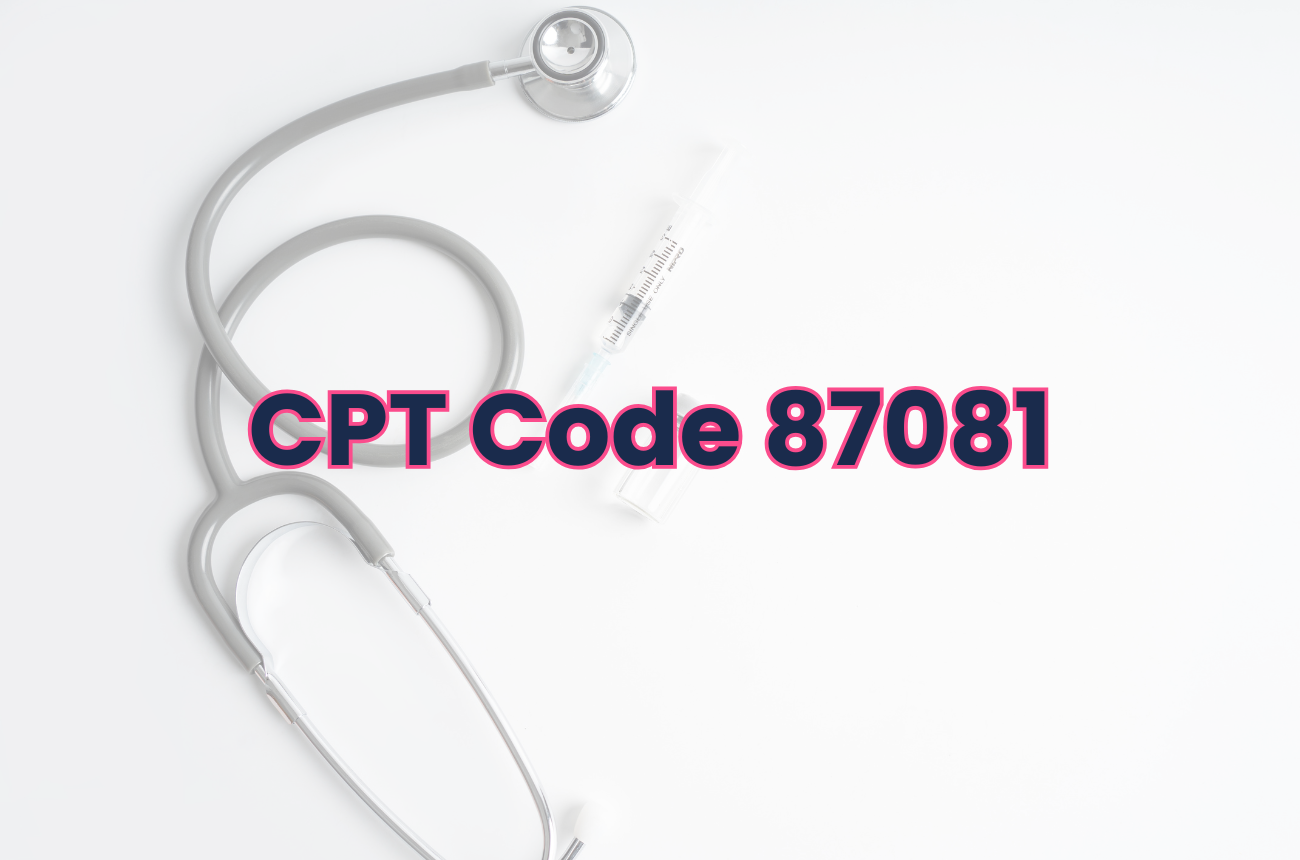
CPT® Code 87081 is used to report a screening culture for presumptive pathogenic organisms with colony estimation. The test is performed to detect the presence of potentially pathogenic bacteria from a clinical specimen before definitive organism identification or susceptibility testing is performed.
This code is commonly used for screening cultures, such as those obtained for methicillin-resistant Staphylococcus aureus (MRSA), Group B Streptococcus, or other organisms when only screening is requested.
This code represents the culture and screening procedure only, not definitive organism identification or antimicrobial susceptibility testing, which may be reported separately when appropriate.
Key Facts About CPT® 87081
- Service type: Laboratory test (microbiology)
- Test: Screening culture for presumptive pathogenic organisms
- Includes: Culture and colony estimation
- Specimen type: Varies (e.g., nasal swab, throat swab, vaginal/rectal swab, wound swab)
- Test purpose: Screen for potentially pathogenic organisms
- Provider type: Laboratories, physicians, and qualified healthcare professionals
Common clinical indications:
- MRSA screening
- Group B Streptococcus (GBS) screening during pregnancy
- Infection control surveillance
- Preoperative screening for colonization
- Evaluation of asymptomatic carrier status when clinically indicated
When to Use CPT® 87081
CPT 87081 is appropriate when:
- Performing a screening culture for presumptive pathogenic organisms
- Estimating bacterial colony growth without definitive organism identification
- Evaluating patients for colonization or infection risk
- Screening is medically necessary based on clinical or public health guidelines
Examples:
- MRSA nasal screening before surgery
- Group B Streptococcus screening in a pregnant patient
- Screening a patient during an infection control investigation
- Evaluating colonization status in a high-risk healthcare setting
Documentation Requirements
To support CPT 87081 billing, documentation should include:
- Patient identifiers and date of service
- Clinical indication for the screening culture
- Specimen source and collection method
- Test performed (screening culture with colony estimation)
- Culture results and date reported
- Ordering provider information
Complete documentation supports medical necessity and accurate microbiology billing.
Reimbursement and Coding Considerations
- CPT 87081 is generally covered when medically necessary
- This code is intended for screening cultures only and does not include definitive organism identification or antimicrobial susceptibility testing
- Additional microbiology codes may be reported if further identification or susceptibility testing is performed and documented
- Diagnosis coding should support the need for infection screening or surveillance
- Coverage may vary depending on payer policies and preventive screening guidelines
Always verify payer-specific microbiology and laboratory billing requirements.
How OptiMantra Supports Microbiology Testing
OptiMantra’s integrated EMR and practice management system streamlines documentation and billing for CPT 87081:
With OptiMantra, providers can:
- Order microbiology cultures within the patient chart
- Document specimen collection and laboratory orders electronically
- Track culture results and integrate them into patient records
- Link laboratory findings to diagnoses, treatment plans, and follow-up care
- Maintain organized laboratory documentation that supports billing compliance and audit preparedness
- Streamline laboratory workflows by integrating orders, results, and clinical documentation within the patient record
By centralizing laboratory workflows, OptiMantra helps practices improve efficiency, ensure compliance, and optimize reimbursement for microbiology testing.
Try OptiMantra for free here!
Disclaimer: CPT® codes are maintained by the American Medical Association. This guide is for informational purposes only and does not replace official coding guidelines or payer policies.
.png)