.png)
Starting a cash-pay or direct-pay clinic can be incredibly rewarding. By eliminating insurance middlemen, clinics can focus on patient care, longer appointments, and a more personalized experience. However, while the revenue model is straightforward, many new clinic owners underestimate the hidden costs involved. Without careful budgeting, these expenses can quickly derail even the most well-intentioned plan.
In this article, we’ll break down the key hidden costs of launching a cash-pay clinic and provide strategies for budgeting effectively so you can launch your practice successfully.
1. Upfront Facility and Equipment Costs
Even a small cash-pay clinic requires a physical space and essential equipment. Beyond rent or mortgage, you’ll need to consider:
- Medical exam tables, diagnostic tools, and treatment equipment
- Waiting room furniture and decor
- Office technology: computers, printers, Wi-Fi, phones
These costs are often one of the first major expenses new clinic owners overlook, but they can quickly add up to tens of thousands of dollars depending on location and specialty.
2. Licensing, Permits, and Legal Fees
Operating a clinic requires more than just a great location. Licenses, permits, and legal compliance are mandatory, including:
- Business registration and local permits
- Medical licenses for providers
- Liability and malpractice insurance
- Legal consultation for cash-pay policies and consent forms
These regulatory costs can easily reach several thousand dollars before you see your first patient, so budgeting ahead is critical.
3. Staff Salaries and Benefits
Even if you’re starting solo, support staff may be necessary to manage front desk operations, billing, and patient communication. Common hidden costs include:
- Receptionists or medical assistants
- Payroll taxes and benefits
- Continuing education or certification for staff
Many clinic owners underestimate the ongoing cost of payroll, which can be one of the largest recurring expenses for a cash-pay practice.
4. Marketing and Patient Acquisition
In a cash-pay model, patients must actively choose your clinic, which makes marketing essential. Expenses may include:
- Website design and maintenance
- SEO and online advertising
- Print materials, local outreach, or community events
Effective marketing can make or break a new cash-pay clinic, but many providers fail to account for these costs in their initial budgets.
5. Technology and Software Costs
A cash-pay clinic still needs robust systems to run efficiently. Hidden tech costs often include:
- Electronic medical records (EMR) or practice management software
- Scheduling systems
- Payment processing solutions
Choosing the right software early can improve patient experience and streamline operations, but it’s an investment that needs to be included in your budget.
6. Unexpected or Miscellaneous Costs
Even with careful planning, some expenses are hard to predict. These might include:
- Office repairs or equipment replacement
- Seasonal fluctuations in patient visits
- Unexpected regulatory changes or compliance updates
Building a contingency fund into your budget is essential to ensure your clinic stays solvent during these surprises.
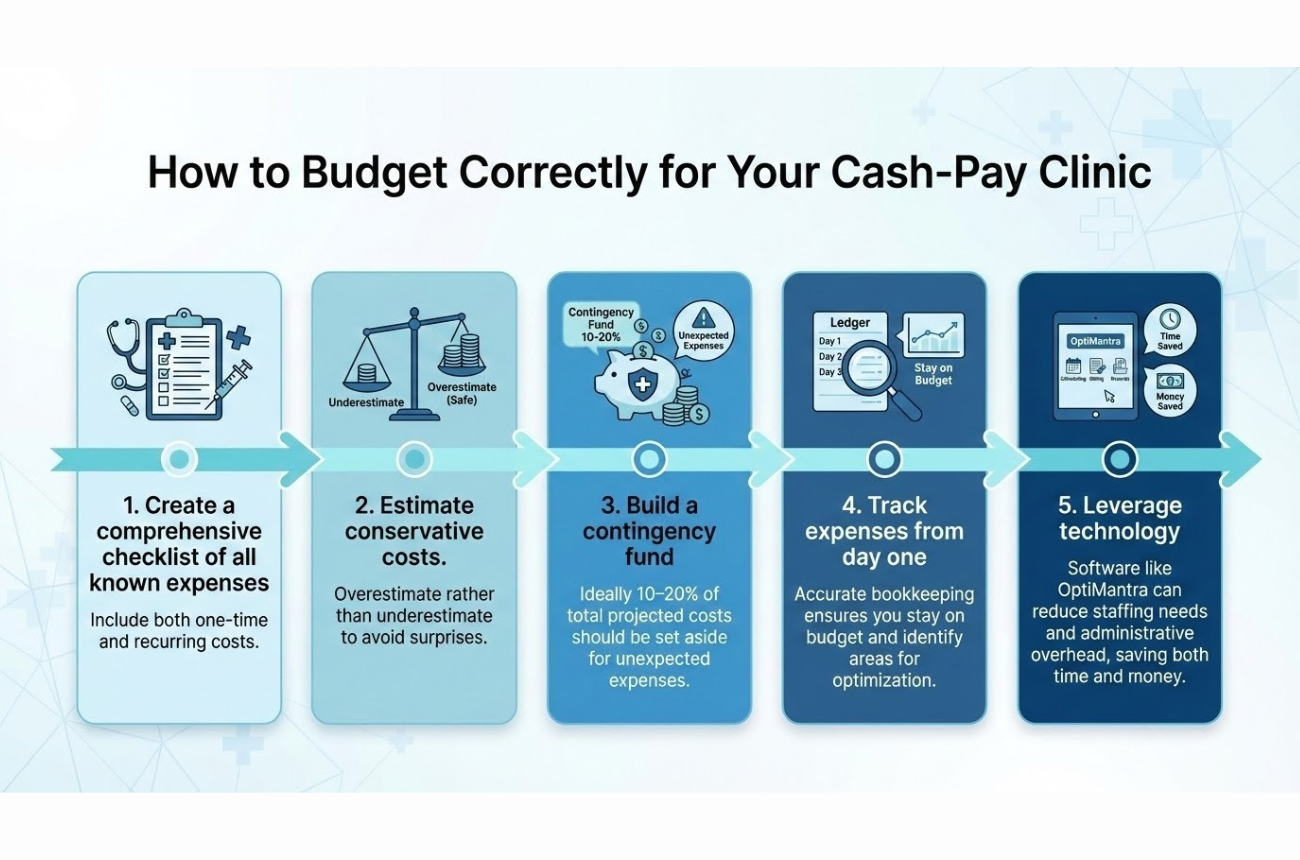
How to Budget Correctly for Your Cash-Pay Clinic
- Create a comprehensive checklist of all known expenses. Include both one-time and recurring costs.
- Estimate conservative costs. Overestimate rather than underestimate to avoid surprises.
- Build a contingency fund. Ideally 10–20% of total projected costs should be set aside for unexpected expenses.
- Track expenses from day one. Accurate bookkeeping ensures you stay on budget and identify areas for optimization.
- Leverage technology. Software like OptiMantra can reduce staffing needs and administrative overhead, saving both time and money.
By approaching your budget strategically, you can launch a cash-pay clinic confidently without being blindsided by hidden costs.
How OptiMantra Helps You Build a Lean, Profitable Cash-Pay Clinic
Starting a cash-pay clinic offers freedom and flexibility, but it’s not without financial challenges. Hidden costs—from facility setup and staffing to marketing and software—can accumulate quickly. The key to success is careful planning, conservative budgeting, and leveraging smart technology to maximize efficiency. That’s where OptiMantra becomes a true strategic advantage.
By consolidating scheduling, charting, payments, patient communication, intake forms, telehealth, and reporting into one intuitive platform, OptiMantra eliminates the need for multiple software subscriptions and reduces administrative workload. Clinics can automate reminders, streamline front-desk processes, accelerate revenue collection, and cut down on manual tasks that typically require additional staff.
For new cash-pay practices working with tight budgets, this all-in-one efficiency translates into lower monthly overhead and a faster path to profitability. Whether you’re trying to minimize staffing costs, improve patient flow, or ensure a professional, seamless patient experience from day one, OptiMantra gives you the tools to operate smarter—not harder.
Ready to streamline your cash-pay clinic and reduce operational costs? Book a demo or sign-up for a free trial with OptiMantra’s today!