Starting a new medical or wellness practice is exciting, but it can quickly become overwhelming. Between setting up your clinic, hiring staff, and marketing your services, patient intake often ends up being an afterthought. Yet, your intake process is one of the most critical components of a smooth, profitable practice. A poorly managed intake system can lead to scheduling errors, incomplete patient records, and frustrated patients, all of which impact your bottom line.
In this article, we’ll explore what new practices often miss during patient intake and share strategies to streamline the process, improve efficiency, and enhance the patient experience.
Why Patient Intake Matters
Patient intake is more than just filling out forms. It’s the first step in creating a positive patient experience and ensuring your team has accurate, actionable information for clinical decision-making. A well-designed intake process helps your practice:
- Reduce administrative errors: Accurate forms reduce the need for follow-up calls and prevent delays in care.
- Enhance patient satisfaction: Efficient intake demonstrates professionalism and respect for patients’ time.
- Support compliance: Proper documentation ensures adherence to HIPAA, OSHA, and other regulations.
- Improve revenue management: Complete and accurate billing information reduces claim denials and speeds up payment.
Despite these benefits, many new practices underestimate the complexity of intake and the common pitfalls that can slow operations.
Common Mistakes New Practices Make in Patient Intake
1. Overlooking Digital Intake Solutions
Many new clinics rely on paper forms or static PDFs, which can create bottlenecks and errors. Patients may forget to fill out sections, and staff must manually enter information into your electronic medical record (EMR) system, increasing the risk of mistakes.
Missed Opportunity: Digitizing intake forms allows patients to complete them online before their appointment. With automated syncing into your EMR, you reduce errors, save staff time, and give clinicians immediate access to critical information.
2. Failing to Collect Complete Patient Information
New practices often underestimate the type and amount of information needed upfront. Incomplete data can lead to follow-up calls, rescheduled appointments, or missing insurance details.
Missed Opportunity: Ensure forms capture all essential details, including demographics, medical history, medication lists, allergies, and consent for treatment. Use digital forms with tailored questions for each treatment, gathering only the relevant information without overwhelming.
3. Ignoring Compliance Requirements
HIPAA, OSHA, and state regulations mandate specific documentation practices for medical and wellness practices. New clinics sometimes miss required consent forms or fail to implement proper data security protocols.
Missed Opportunity: Integrating compliance checks into your intake workflow ensures every patient completes mandatory forms. Digital platforms can provide audit trails and secure storage, protecting both patients and your practice.
4. Underestimating the Importance of Patient Experience
Long, confusing forms can frustrate patients, making them less likely to return or refer others. Practices often focus solely on data collection and forget about the user experience.
Missed Opportunity: Streamlined, mobile-friendly intake forms improve the patient experience. Include clear instructions, progress indicators, and an option to save and return later. Simple design changes can drastically increase completion rates and satisfaction.
5. Neglecting Staff Training and Workflow Integration
Even the best forms fail if your staff isn’t trained to use them effectively. New practices may not have clear workflows for verifying information, following up on incomplete forms, or integrating intake data into clinical systems.
Missed Opportunity: Train staff on intake workflows, digital form management, and patient communication. Define roles and responsibilities so every team member knows how to handle incoming forms efficiently.
Strategies to Streamline Patient Intake
Implement a Fully Digital Intake System
Digital intake platforms like OptiMantra enable patients to complete forms online, either at home or in the clinic. Benefits include:
- Real-time form submission and verification
- Automatic syncing to patient charts in your EMR
- Reduced paperwork and storage needs
- Faster appointment check-ins
With digital intake, patients can also update information themselves between visits, keeping records current without additional staff effort.
Standardize Forms and Processes
Having standardized intake forms ensures consistency across patients and visits. Consider creating templates for:
- New patient registration
- Medical history and lifestyle questionnaires
- Consent forms and HIPAA acknowledgements
- Telehealth or virtual visit intake
Standardization simplifies staff training and reduces errors in data collection.
Integrate Intake With EMR and Billing Systems
Intake forms are only useful if data flows seamlessly into your clinical and financial systems. Integration ensures:
- Accurate patient records in the EMR
- Correct insurance and billing information for faster claims
- Automated notifications for incomplete forms
- Real-time access to patient information for clinicians
Integration eliminates duplicate data entry, freeing staff to focus on patient care.
Train Staff and Monitor Workflows
Even the most advanced intake systems require human oversight. Train your team on:
- Reviewing incoming forms for completeness
- Flagging potential compliance issues
- Using alerts and notifications for follow-ups
- Assisting patients who need help completing forms
Regular audits and workflow reviews help identify bottlenecks and continuously improve the process.
Benefits of Streamlined Patient Intake
- Increased Efficiency
Automation reduces manual data entry and staff workload, allowing your team to focus on care delivery rather than paperwork. - Improved Patient Satisfaction
Patients appreciate a seamless intake process that saves them time and reduces confusion. Satisfied patients are more likely to return and refer others. - Enhanced Accuracy and Compliance
Digital intake reduces errors and ensures that forms are completed correctly, supporting HIPAA compliance and audit readiness. - Faster Revenue Cycle
Complete and accurate intake data ensures smoother billing, fewer claim denials, and faster reimbursement. - Actionable Data for Clinical Decisions
Structured intake data provides clinicians with immediate access to critical patient information, enabling better care decisions from the first visit.
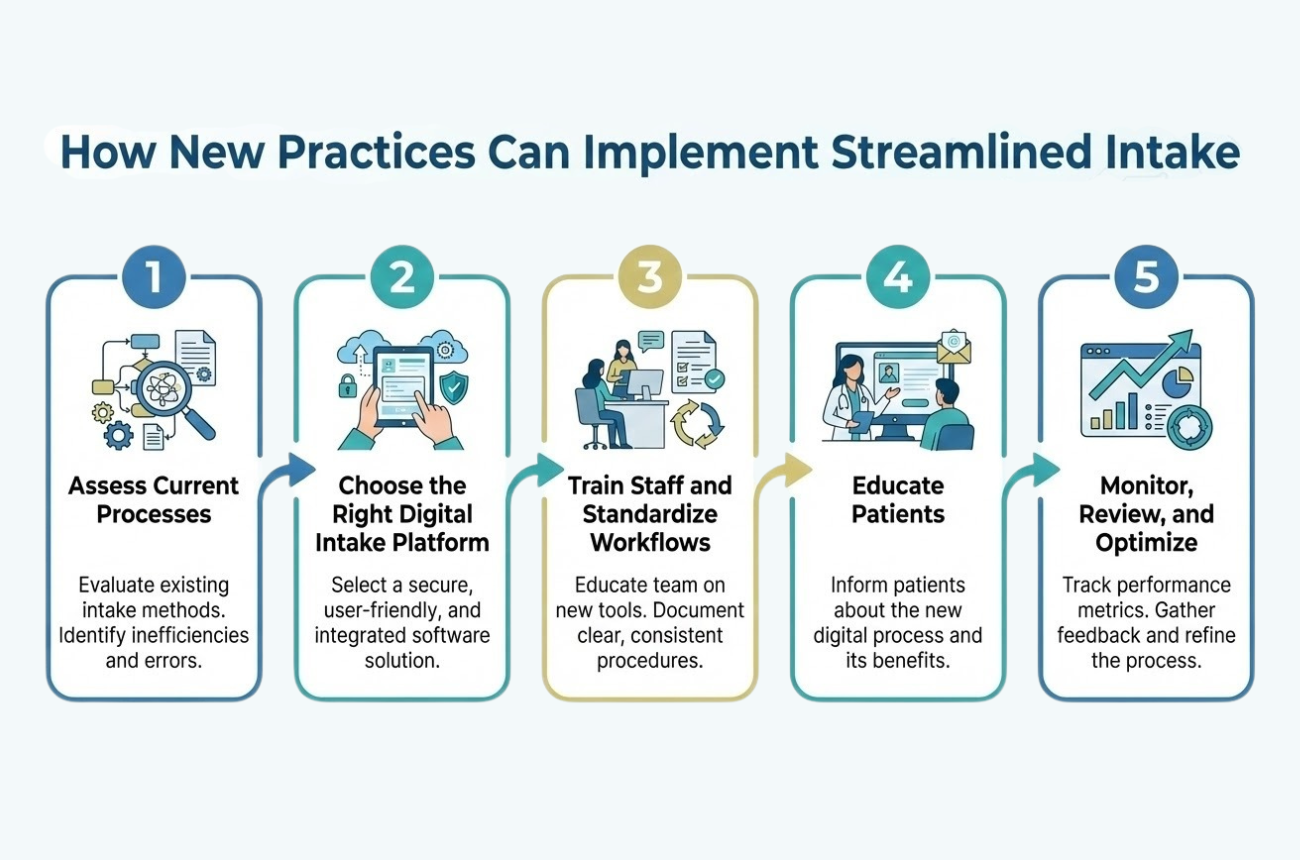
How New Practices Can Implement Streamlined Intake
Step 1: Assess Current Processes
Evaluate how your practice currently collects patient information. Identify bottlenecks, frequent errors, and areas for improvement.
Step 2: Choose the Right Digital Intake Platform
Look for solutions that offer:
- HIPAA-compliant forms and data storage
- EMR and billing integration
- Mobile-friendly forms
- Template customization
Step 3: Train Staff and Standardize Workflows
Provide training sessions for staff, ensuring they understand their roles in the intake process. Document workflows for consistency.
Step 4: Educate Patients
Communicate the benefits of digital intake to patients. Offer instructions for completing forms online and provide support for those less tech-savvy.
Step 5: Monitor, Review, and Optimize
Track key metrics, such as form completion rates, errors, and patient feedback. Continuously refine forms and workflows to enhance efficiency and patient experience.
Why OptiMantra is Ideal for Streamlined Intake
OptiMantra’s platform is designed to simplify patient intake while improving accuracy and compliance. With OptiMantra, new practices can:
- Offer fully digital, mobile-friendly intake forms
- Automatically sync patient data into the EMR and billing system
- Use customizable templates for targeted data collection
- Ensure HIPAA-compliant storage and audit readiness
- Train staff with intuitive workflows for effortless integration
By implementing OptiMantra, practices not only avoid common intake mistakes but also create a smoother, more efficient experience for patients and staff alike.
Setting Your Practice Up for Success
Patient intake is often underestimated in new medical and wellness practices, yet it plays a pivotal role in operational efficiency, patient satisfaction, compliance, and revenue management. By avoiding common pitfalls and implementing a digital, standardized, and integrated intake process, new practices can create a seamless experience from the very first interaction.
OptiMantra provides a comprehensive solution for streamlining intake, ensuring accuracy, compliance, and a patient-friendly experience. New practices that invest in an optimized intake workflow set the stage for long-term success.
See the difference for yourself, schedule a personalized demo or start a free trial of OptiMantra today and streamline your patient intake from day one.


.png)