

Psychologists should look for an EMR for psychologists that supports the unique demands of therapy and psychological care, not just basic medical documentation. The right platform should make it easier to document sessions, track treatment plans, manage scheduling and billing, collect intake forms, communicate securely with clients, and maintain organized patient records. If you're evaluating new software, focus on how well it fits your clinical workflow, supports compliance, and can grow with your practice.
Whether you're opening a private practice, joining a group practice, or replacing an existing system, choosing the right EMR is an investment in both patient care and operational efficiency.
Why Psychologists Need More Than a General EMR
The workflow of a psychology practice differs significantly from many other healthcare specialties.
Appointments are often longer. Treatment relationships may continue for months or years. Documentation centers on psychotherapy progress, treatment planning, assessments, and ongoing clinical observations rather than procedures or medication management.
Administrative tasks also add up quickly. Intake paperwork, scheduling recurring appointments, collecting payments, maintaining secure communication, and organizing clinical records all require time that could otherwise be spent with clients.
An EMR designed to support these workflows can help reduce administrative burden while keeping clinical information organized and accessible.
What to Look for in an EMR for Psychologists
Not every platform marketed to behavioral health providers meets the needs of psychologists. As you compare options, focus on the features that directly impact your daily workflow.
Flexible Therapy Documentation
Documentation is one of the most important functions of any psychology EMR.
Look for software that allows you to create and customize note templates based on your practice's needs. This may include:
- Initial evaluations
- Progress notes
- Treatment plans
- Psychological assessment documentation
- Individual therapy notes
- Couples or family therapy documentation
- Group session notes
Customizable templates can help improve consistency while reducing repetitive data entry.
Treatment Plan Tracking
Therapy is an ongoing process, making it important to monitor progress over time.
An effective EMR should make it easy to:
- Document treatment goals
- Record interventions
- Track progress across sessions
- Update care plans as treatment evolves
- Review historical documentation quickly
Having a clear view of a client's therapeutic journey supports both continuity of care and clinical decision-making.
Client Intake and Secure Communication
The patient experience begins well before the first appointment.
Many psychology practices benefit from an EMR that includes a secure client portal where patients can:
- Complete intake paperwork
- Sign consent forms electronically
- Exchange secure messages
- Access shared documents
- Update personal information
Digital workflows reduce paperwork while helping practices stay organized.
Scheduling That Supports Recurring Therapy
Unlike many medical specialties, psychology practices often schedule recurring appointments weeks or months in advance.
Look for scheduling tools that support:
- Recurring appointments
- Multiple providers
- Calendar management
- Appointment reminders
- Online scheduling requests
- Waitlist functionality, if needed
Efficient scheduling helps reduce administrative work and can improve appointment attendance.
Billing and Payment Workflows
Every psychology practice has its own financial model.
Some accept insurance. Others operate as private-pay practices or offer a combination of both.
An EMR should support the billing workflows your practice uses, including:
- Insurance claim management
- Superbills
- Payment collection
- Recurring invoices when appropriate
- Financial reporting
Choosing software that aligns with your business model can reduce manual work and improve revenue cycle efficiency.
Reporting and Practice Insights
Good reporting helps practice owners understand both clinical and operational performance.
Useful reports may include:
- Appointment trends
- Revenue summaries
- Outstanding balances
- Provider productivity
- Patient volume
- Financial performance
These insights can help practices identify opportunities to improve efficiency and support growth.
Understanding Documentation Requirements by License Type
Many behavioral health practices include professionals with different licenses working together. While there is significant overlap, documentation and workflow needs can vary.
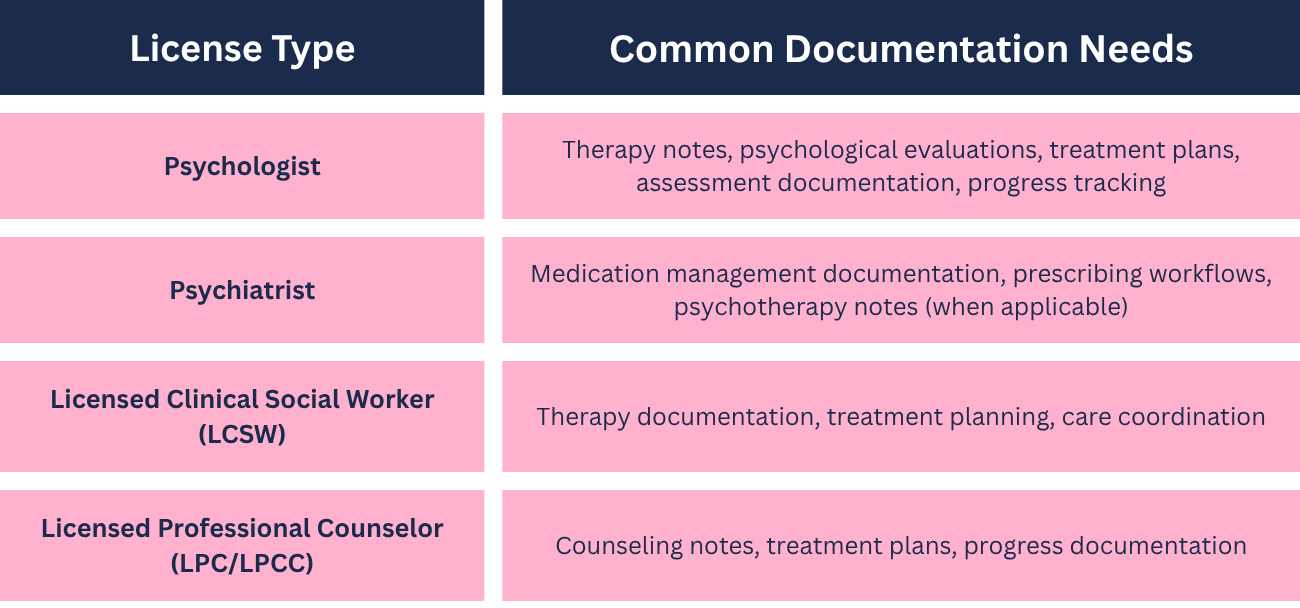
If your organization includes multiple provider types, ask whether the EMR supports flexible documentation templates and workflows for different clinical roles.
Questions to Ask Before Choosing an EMR
Before signing a contract, ask vendors questions that go beyond feature lists.
Consider asking:
- Can documentation templates be customized?
- How are treatment plans managed?
- Does the client portal support online intake forms and consent documents?
- How are recurring appointments handled?
- What billing workflows are supported?
- What reporting tools are included?
- What integrations are available?
- How does onboarding work?
- What customer support is provided after implementation?
- Can practice data be exported if needed?
Clear answers to these questions can help prevent surprises after implementation.
Build a Stronger Foundation for Your Practice
Psychologists need technology that supports both clinical documentation and the day-to-day management of their practice. OptiMantra brings these workflows together in a single platform designed for specialty healthcare providers.
Features that support psychology practices include:
- Customizable documentation templates for therapy notes, evaluations, and treatment plans
- Secure patient portal for intake forms, electronic consent forms, document sharing, and messaging
- Integrated scheduling to help manage appointments and provider calendars
- Insurance billing and cash-pay workflows, including superbills and payment processing
- Role-based permissions to help manage staff access to patient information
- Reporting tools that provide visibility into financial and operational performance
- ePrescribing for practices with prescribing clinicians
- Lab integrations with major and specialty laboratories when applicable to multidisciplinary practices
By combining electronic medical records with practice management tools, OptiMantra helps reduce administrative work while supporting organized clinical documentation and efficient daily operations.
If you're exploring new options, request an OptiMantra demo or start a free trial to see how its integrated EMR and practice management platform can support psychology practices and other specialty healthcare clinics.
Frequently Asked Questions
Is there EMR software designed specifically for psychologists?
Yes. Some EMRs are built specifically for therapy and psychology practices, while others are designed for a broader range of behavioral health or specialty healthcare providers. The best choice depends on your documentation needs, billing model, and whether your practice includes multiple provider types.
What note format do most psychology EMRs use?
Many psychology EMRs support customizable psychotherapy note templates and treatment plans. Practices may use formats such as SOAP notes, DAP notes, or other documentation styles depending on provider preference, payer requirements, and organizational policies.
Can psychologists use a general healthcare EMR?
They can, but general-purpose medical EMRs may not offer the flexibility needed for psychotherapy documentation, recurring appointments, treatment planning, and other psychology-specific workflows. An EMR designed to accommodate behavioral health documentation often provides a better fit.
What should I prioritize when comparing psychology EMRs?
Focus on documentation flexibility, scheduling, client portal capabilities, billing support, reporting, implementation services, customer support, and how well the platform fits your practice's workflow.



.png)