No-shows and last-minute cancellations can disrupt clinic operations, reduce revenue, and negatively impact patient care. As patient expectations evolve in 2026, medical practices must balance flexibility with accountability to keep schedules running efficiently. Without a clear policy in place, missed appointments can quickly create scheduling gaps, staff inefficiencies, and frustration on both sides of the front desk.
A well-designed no-show appointment policy establishes clear expectations, protects provider time, and encourages patients to take an active role in managing their care. In the sections below, we’ll walk through the key steps for creating a policy that is fair, enforceable, and patient-friendly—so your practice can reduce missed appointments while maintaining positive patient relationships.
Why a No-Show Policy Matters
A structured no-show policy plays a critical role in maintaining both operational stability and quality patient care. When expectations are clearly defined, patients are more likely to respect appointment times, and staff can plan schedules with confidence. Over time, this consistency helps reduce stress, improve efficiency, and strengthen patient-provider relationships.
Key benefits include:
- Reduces revenue loss: Missed appointments directly impact your bottom line.
- Improves scheduling efficiency: Staff can allocate time to patients who show up.
- Encourages patient accountability: Clear expectations minimize repeated cancellations.
- Supports patient care continuity: Regular attendance ensures better outcomes.
By implementing a consistent policy, your practice can create a culture of responsibility while maintaining a patient-friendly environment.
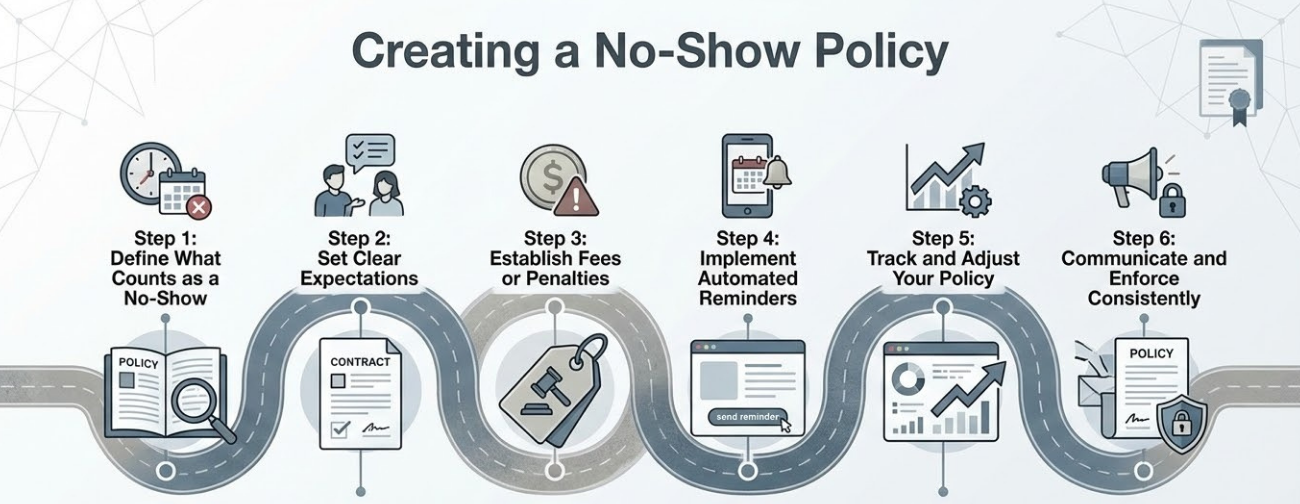
Step 1: Define What Counts as a No-Show
The foundation of an effective policy is clearly defining what qualifies as a no-show or late cancellation. Patients should understand exactly which behaviors fall under the policy and why they matter to your practice. Clear definitions reduce disputes and make enforcement easier for staff.
Common categories include:
- No-shows: Patients who do not arrive without notice.
- Late cancellations: Patients canceling within 24–48 hours of the appointment.
- Repeated offenses: Patients who habitually miss or reschedule appointments.
Specify consequences for each scenario, such as rescheduling limitations, fees, or suspension of certain services.
Step 2: Set Clear Expectations
Even the best policy is ineffective if patients never see it or don’t understand it. Setting expectations early and reinforcing them consistently helps prevent misunderstandings and improves compliance. Clear communication also positions your practice as organized, transparent, and professional.
Communicate your policy in multiple ways to ensure patients understand:
- Include the policy in appointment confirmation emails and SMS reminders.
- Post the policy on your website and in the waiting room.
- Train staff to explain the policy during scheduling calls or check-ins.
Transparency reduces confusion and helps patients adhere to the rules.
Step 3: Establish Fees or Penalties (If Applicable)
Many practices choose to implement no-show or late cancellation fees to discourage repeat behavior and recover lost revenue. When fees are used, clarity and fairness are essential to maintain patient trust. Patients should know exactly when fees apply and how they are billed.
If you charge fees:
- Be clear about amounts and when they apply.
- Offer payment options or integrate the fees into patient accounts.
- Ensure the policy complies with state and federal regulations.
A transparent, well-communicated fee structure helps reinforce accountability while preserving positive patient relationships.
Step 4: Implement Automated Reminders
Automated appointment reminders are one of the most effective tools for reducing no-shows. Timely notifications help patients remember appointments, confirm attendance, or reschedule when needed—before it becomes a problem. Automation also reduces the burden on front-desk staff.
Effective reminder strategies include:
- Use SMS, email, or phone call reminders 24–48 hours in advance.
- Include a simple way for patients to confirm, cancel, or reschedule.
- Provide clear instructions about your no-show policy within reminders.
Consistent, automated reminders support better attendance and keep schedules running smoothly.
Step 5: Track and Adjust Your Policy
A no-show policy should evolve based on real data from your practice. Tracking attendance trends allows you to identify patterns, address recurring issues, and fine-tune your approach. Data-driven decisions help ensure your policy remains fair, effective, and patient-centered.
Consider monitoring:
- Track no-show rates and identify repeat offenders.
- Adjust appointment scheduling buffers or reminder strategies.
- Consider incentives for patients who consistently attend appointments.
Data-driven adjustments help your policy remain effective and fair.
Step 6: Communicate and Enforce Consistently
Consistency is critical to maintaining credibility and fairness. When policies are enforced unevenly, patients become confused or frustrated, and staff may feel uncomfortable applying rules. A unified approach builds trust and accountability across your entire practice.
To ensure consistency:
- Apply rules fairly to all patients.
- Ensure all staff members are trained to follow the policy.
- Use patient-friendly language to maintain trust and professionalism.
Clear communication reduces frustration and reinforces accountability.
Simplify No-Show Management with OptiMantra
A well-crafted no-show appointment policy protects your practice, maximizes revenue, and supports better patient care. By clearly defining expectations, reinforcing policies through reminders, tracking attendance patterns, and enforcing rules consistently, clinics can significantly reduce missed appointments without damaging patient relationships. The key is pairing a strong policy with the right technology to support it behind the scenes.
OptiMantra helps practices implement and enforce no-show policies with less manual effort and greater consistency by centralizing scheduling, communication, and tracking in one platform. With OptiMantra, your team can:
- Automate appointment reminders via SMS and email to reduce forgetfulness and last-minute cancellations
- Track no-shows and late cancellations directly within the patient record for easy visibility and follow-up
- Identify repeat offenders using attendance history and reporting tools
- Link no-show activity to billing workflows for streamlined fee management when applicable
- Standardize policy enforcement across staff with consistent documentation and workflows
- Reduce front-desk workload by minimizing manual calls, reminders, and rescheduling tasks
By combining clear policies with intelligent automation, OptiMantra empowers practices to keep schedules full, staff productive, and patients accountable—without sacrificing the patient experience.
Start a free trial or schedule a personalized demo today to see how OptiMantra can help you take control of missed appointments and optimize your practice workflow!